Over the past two years TAIR has taken the lead in organizing a community effort to reannotate the Arabidopsis thaliana genome. The result is TAIR12, recently released on the European Nucleotide Archive (ENA) and National Center for Biotechnology Information (NCBI).
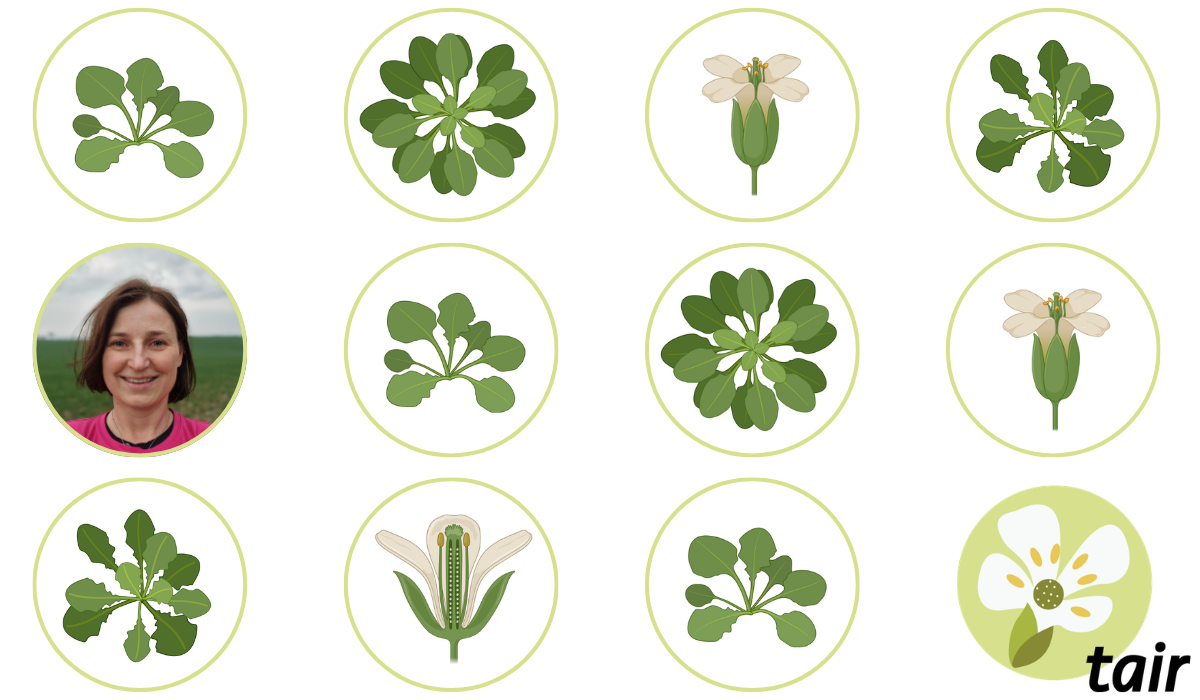
The project was only made possible through the work of nearly 100 volunteers based in labs all over the world who generously donated their time and expertise. Scientists like Eva Dvořák Tomaštíková of the Czech Academy of Sciences chose to contribute to this work for the benefit of science. A. thaliana is key to understanding plant genetics, with implications for fields from plant biology to pharmacology to crop research. TAIR, as the most comprehensive and trusted resource on A. thaliana, is essential to that work. TAIR12 incorporates the latest discoveries and evidence using the most advanced techniques and technologies. For researchers who use TAIR in their daily work, that means greater accuracy and reliability, superior experiment design, more precise hypotheses, and ultimately better, more efficient research.
In this series, we’re pleased to introduce you to some of the volunteers who helped make this possible. Please join us in expressing gratitude for their efforts!
Meet Eva Dvořák Tomaštíková
Eva Dvořák Tomaštíková focuses on DNA damage repair and SUMO modification at the Czech Academy of Sciences.
Why did you choose to volunteer your time to support the TAIR12 re-annotation project?
I volunteered because TAIR12 is an important tool for the plant biology community. I also enjoyed being a part of a global team in a project that helps the scientific community.
Why is reannotation important to the plant biology research community?
Reannotation ensures that researchers have access to the most accurate genome information, which is necessary for reliable experiments.
What work did you perform as part of the project?
My work involved reviewing the existing gene models with the new data, ensuring the accuracy of protein-coding genes in the Arabidopsis thaliana genome and, if needed, updating gene structure.
What was the most challenging aspect of the work? The most rewarding?
The most challenging part was the detailed review process, which required careful attention to complex gene models and sequence issues. The most rewarding was knowing that the collective effort will support future discoveries in plant biology.
What are your hopes for TAIR12 and its impact in the field?
I believe TAIR12 will become the standard for Arabidopsis genome annotation, supporting cutting-edge research. I also hope it will inspire more researchers to join the community-driven annotation projects.
There’s more to come! Watch this space, for researcher profiles, publication information, and other news and updates on TAIR12.